
Mexican Snacks: 30 Best Types, Names & Where to Buy

Published · Updated
You probably landed here looking for a name, a flavor, or something you can actually order tonight. Mexican snacks are a lot more than chips and salsa, and the category covers everything from sour candy strips and chamoy-coated gummies to spicy peanuts and freeze-dried treats. Most of it never reaches a regular grocery aisle, which is why people end up hunting for it online.
This guide breaks down the best Mexican snacks by category, from traditional street food to the sour belts and chamoy dipping platters that are blowing up online right now.
What Are Mexican Snacks?
In Mexico, snacking has its own word: antojitos, meaning "little cravings." The concept goes way beyond what Americans think of as snacks. Antojitos include street food like elote (grilled corn with chili and lime), chicharron (pork rinds), and tostilocos (a wild combination of tortilla chips, chamoy, lime, hot sauce, and cucumber in a bag). According to Innova Market Insights, 59% of Mexican consumers regularly buy salty snacks, and taste is the number one purchase driver for half of them.
But Mexican snacking doesn't stop at savory. The sweet side is just as big, and it's the part that's taking over in the U.S. right now.
The Flavor DNA of Mexican Snacks
Every Mexican snack, whether it's a bag of spicy peanuts or a strip of rainbow sour candy, runs on the same formula: chili + lime + something sweet. That combination is what people now call "swicy" (sweet + spicy), and Mexican snack makers have been doing it for decades before the term existed. Chamoy is that same formula in sauce form, which is how it moved from neighborhood dulcerias onto mainstream American menus.
What Are the Most Popular Mexican Snacks?
The most popular Mexican snacks are sour belts, chamoy-coated candy and dried fruit, spicy peanuts, tamarind bars like Pulparindo, and classic sweets like Mazapan. The sour and chamoy categories are driving almost all of the growth on the U.S. side of the border.
Mexican snacks break into three main lanes: savory, sweet-spicy, and sour. Most of the growth in the U.S. is happening in the sour and chamoy-coated categories, but all three are worth knowing.
Traditional Savory Snacks (Antojitos)
These are the street food classics. Elote and esquites (corn cups) with mayo, chili, and lime. Chicharron dusted with hot sauce.
Duritos, the pinwheel-shaped wheat chips that puff up when fried. And tostilocos, where you take a bag of chips and load it with chamoy, cueritos (pickled pork rinds), cucumber, lime juice, and Valentina hot sauce.
These don't ship well online, but they're the soul of Mexican snacking culture. If you're looking for the candy and treat side of Mexican snacking, that's where things get interesting.
Sweet and Spicy Mexican Snacks
This is the category that's crossing over to mainstream American snacking. Mazapan (crumbly peanut candy), tamarind bars like Pulparindo, and chamoy-coated dried fruit and gummies (see our chamoy candy guide for the full breakdown). Mexico's confectionery market topped $3.1 billion in 2025, per the IMARC Group.
Our complete Mexican candy guide covers the brands and types in detail. The sweet-spicy combination that defines these snacks is now showing up in everything from mainstream chips to cocktail rimming sauces. If you want it on your own fruit at home, a jar of chamoy sauce is the shortcut.
Sour Mexican Snacks and Candy
Sour belts, sour gummies, sour strips. This is where Mexican snacking and American candy trends meet, and it's growing faster than almost any other snack category. The sour candy market hit $1.5 billion in 2023 and is projected to reach $3.2 billion by 2033, according to industry reports.
Mexican candy shops in particular are leading the sour belt trend by pairing them with chamoy for a tangy-spicy-sour combination you can't get anywhere else. If you want to taste the coated version first, the chamoy candy bags are where that pairing already comes done for you.
Mexican Street Snacks
Walk past a corn cart on a Mexican street in the evening and you smell it before you see it. Street snacks are where the antojitos above actually live, and the cart itself does half the work. Here is what you are looking at, and how close you can get to it in your own kitchen.
Elotes come off the grill and get rolled in mayo, cotija, chili powder, and lime, eaten straight off the stick. Esquites are the same idea cut off the cob and served in a cup with a spoon, which is the version you want if you plan to keep walking. Both take about ten minutes at home with grilled corn and a shaker of chili-lime seasoning.
Duros, the puffed wheat pinwheels also sold as duritos, get fried in front of you and hit with lime and hot sauce while they are still too hot to hold. Tostilocos are built inside the chip bag itself: chamoy, cueritos, cucumber, peanuts, and lime, stirred with a fork and eaten out of the foil. Chicharrones preparados stack those same toppings on a wheel of crispy pork rind, which falls apart as you eat it and is supposed to.
The part you can genuinely recreate at home is the topping, not the cart. A bottle of chamoy sauce over cut fruit, corn, or chips gets you most of the way there. The same sauce doubles as the rim dip for the cup.
Mexican Snacks List: 30 Names Worth Knowing
If you want a quick list of Mexican snacks by name, here are 30 of the most recognized, grouped by type. Some are decades-old grocery staples; others are the viral chamoy and sour treats driving the category's growth (the global Hispanic foods market reached $36.5 billion in 2024, with the U.S. the largest share, per Market Research Future). Start at the top for traditional, scroll down for the modern viral picks.
| Snack | Type | What it is |
|---|---|---|
| Takis | Savory | Rolled corn chips in fiery chili-lime (Fuego is the classic). |
| Duritos | Savory | Pinwheel wheat chips that puff up when fried, served with hot sauce and lime. |
| Chicharrones | Savory | Crispy pork rinds (or wheat versions) dusted with chili. |
| Tostilocos | Savory | A bag of chips loaded with chamoy, cueritos, cucumber, lime, and Valentina. |
| Elote / Esquites | Savory | Grilled or cup corn with mayo, cotija, chili, and lime. |
| Churrumais | Savory | Rolled fried corn strips seasoned with lime and chili. |
| Rancheritos | Savory | Corn chips in a smoky chili-and-lime seasoning, a Barcel staple. |
| Sabritones | Savory | Puffed wheat wheels dusted in chile and lime powder. |
| Spicy peanuts | Spicy | Cacahuates japoneses and chili-lime peanuts, crunchy and salty with real heat. See Spicy Sour Peanuts. |
| Lucas | Spicy powder | Sour-spicy powders and gels (Muecas, Gusano) you pour or dip. |
| Vero Mango | Spicy lollipop | Mango lollipop rolled in chili powder. |
| Vero Elotes | Spicy lollipop | Corn-shaped lollipop coated in chili, sweet then hot. |
| Skwinkles | Sour | Chewy chili-tamarind strips, sold in watermelon and mango too. |
| Salsagheti | Tamarind | Candy "spaghetti" strands with a tamarind sauce packet to pour over. |
| Pelon Pelo Rico | Tamarind | Push-up tamarind paste squeezed through a top, sweet and spicy. |
| Pulparindo | Tamarind | Chewy tamarind bar, salty-sweet-spicy, a De La Rosa classic. |
| Mazapan | Sweet | Crumbly peanut candy disc from De La Rosa that melts in your mouth. |
| Glorias | Sweet | Caramel and pecan candy from Linares, soft and chewy. |
| Obleas | Sweet | Thin wafers sandwiching cajeta (goat's-milk caramel). |
| Gansito | Sweet | Marinela's chocolate-covered strawberry-and-cream snack cake. |
| Bubulubu | Sweet | Layered marshmallow, strawberry jelly, and chocolate bar. |
| Duvalin | Sweet | Little tub of hazelnut, vanilla, and strawberry cream eaten with a tiny spoon. |
| Carlos V | Sweet | Thin milk chocolate bar, the lunchbox classic every Mexican kid knows. |
| Canelitas | Sweet | Cinnamon cookies made for dunking in coffee or hot chocolate. |
| Paleta Payaso | Sweet | Marshmallow clown face on a stick, covered in chocolate and gumdrops. |
| Rainbow Sour Belts | Sour | Layered sour candy strips, the viral pick. See Rainbow Sour Belts. |
| Chamoy gummies | Chamoy | Gummy worms and bears coated in chamoy and Tajin. See our chamoy candy guide. |
| Chamoy dried mango | Chamoy | Dried mango drenched in chamoy, sweet-sour-spicy all at once. See Chamoy Dried Mango. |
| Gusher balls with chamoy | Sour | Liquid-center gushers coated in chamoy. See our fruit gushers guide. |
| Freeze-dried candy | Novelty | Crunchy, puffed-up candy with concentrated flavor. See Freeze Dried Crunchos. |
New to Mexican snacks and not sure what to try first? Start with rainbow sour belts (the gateway pick everyone likes), add a chamoy dipping platter to taste the chili-lime-sweet combo, and grab one nostalgic sweet like Mazapan. That trio covers the three lanes in one order.
The category is deep, and it keeps getting bigger. Here's how Mexico's overall snacks market is tracking:
Why Are Sour Belts the Hottest Mexican Snack Right Now?
Sour belts are long, flat candy strips coated in sour sugar crystals. They come in rainbow, strawberry, watermelon, and blue raspberry varieties. On their own, they're already addictive. But Mexican candy shops took them further by dipping them in chamoy sauce and dusting them with Tajin, creating a snack that hits sour, sweet, salty, and spicy all at once.
TikTok accelerated this. Videos of people pulling apart rainbow sour belts coated in chamoy have millions of views. Gen Z and millennials are driving demand because they're drawn to bold, multi-layered flavors, and sour belts deliver exactly that.

Rainbow Sour Belts and Candy Strips
Rainbow Sour Belts are the one most people try first. The rainbow layering gives you multiple fruit flavors in each bite, with a crunchy sour sugar exterior and a chewy, stretchy center. They look great on camera, which is half the reason they went viral, but they also genuinely taste good.
The texture is what makes them work as a snack rather than just a candy. They're thick enough to have real chew, and the sour coating dissolves slowly instead of hitting you all at once. You can eat them straight out of the bag or use them as a dipper for chamoy sauce.
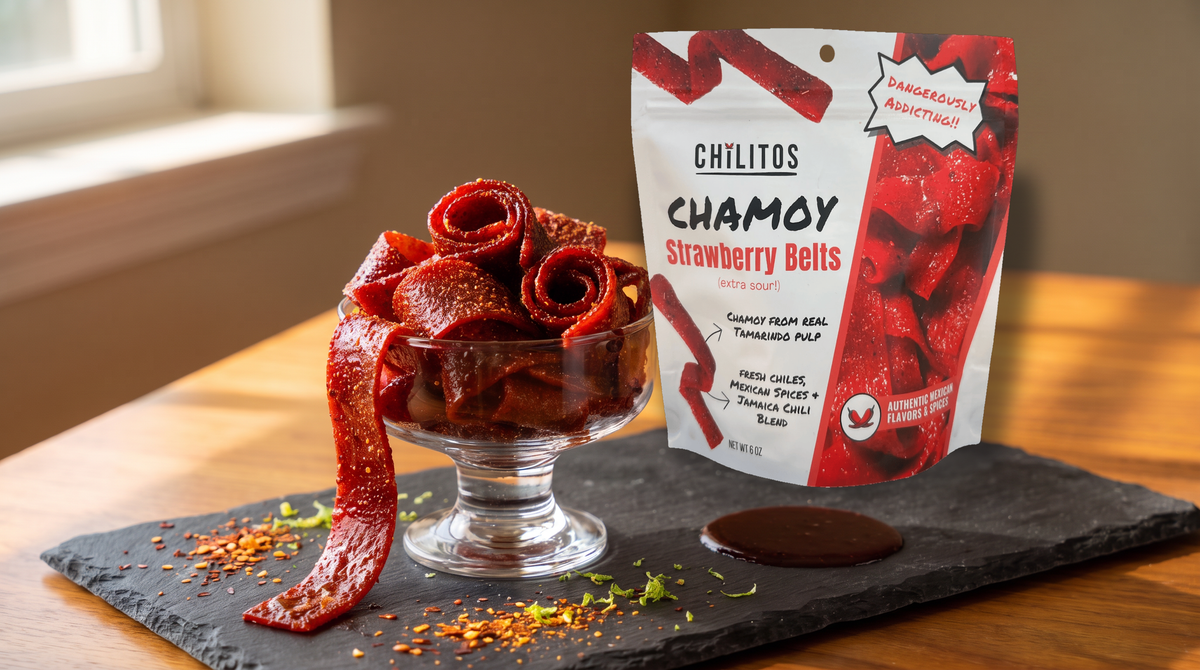
Strawberry and Fruit Sour Belts
If rainbow isn't your thing, single-flavor sour belts let you zero in on what you like. Strawberry belts are sweeter and milder than rainbow, and watermelon belts are the most refreshing of the bunch and pair especially well with chamoy. Blue Raspberry Sour Belts lean tart with a sharper sour kick.
Each flavor has a slightly different texture and sour intensity, so it's worth trying a few to find your favorite. Single flavors sell out and come back, so when the one you want is gone, the Rainbow Sour Belts bag layers several of them into one strip. For a deeper look at the strawberry side, see our strawberry candy guide.
How Do You Eat Mexican Snacks with Chamoy?
Chamoy is the secret weapon of Mexican snacking. Start with apricots or plums brined until they turn tangy, work in chili and lime, and you get a sauce that lands sweet, sour, salty, and hot in the same bite. If you've never used it, think of it as the Mexican equivalent of ranch dressing: it goes on everything and makes everything better.
Learn more about what chamoy is and how it's made. The most common way to use it with snacks is dipping. You take sour belts, gummy worms, dried mango, or fresh fruit, and you dip them in chamoy sauce.
Then you sprinkle Tajin on top. That's it. A snack that was already good becomes the one people keep reaching for.
Chamoy Dipping Platters
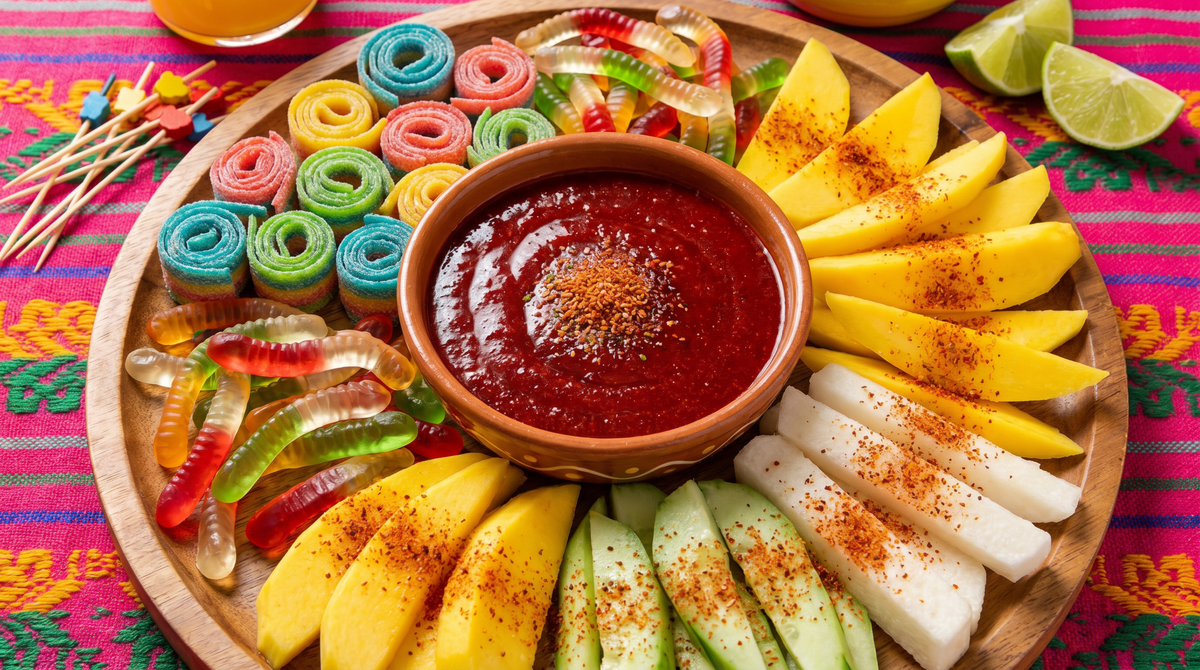
Dipping platters take the chamoy snack experience and turn it into something you share. A good platter has a bowl of chamoy in the center surrounded by different snacks for dipping: sour belts, gummy worms, dried mango, fresh fruit, and peanuts.
Our two chamoy candy dipping platters arrive pre-arranged, each with three different candies, a pound in all, set around a 4 oz chamoy dipping cup. They get ordered for game nights, get-togethers, and snack tables built to be filmed. They are built for a weekend table.

Nudie Sour Belts: The No-Coating Option
Not everyone wants the sour sugar coating. Nudie sour belts and nudie strawberry belts skip the sugar and give you just the chewy belt with a softer, more natural fruit flavor. They're a good gateway snack for people who want to try Mexican sour candy without jumping straight into the intense sour coating.
They also make a great chamoy dipper because the chamoy sticks to the smooth surface better. Uncoated belts come and go from the shelf, so if you want something you can order right now, the Blue Raspberry Sour Belts are the single-flavor belt we keep stocked.
What Mexican Snack Brands Should You Know?
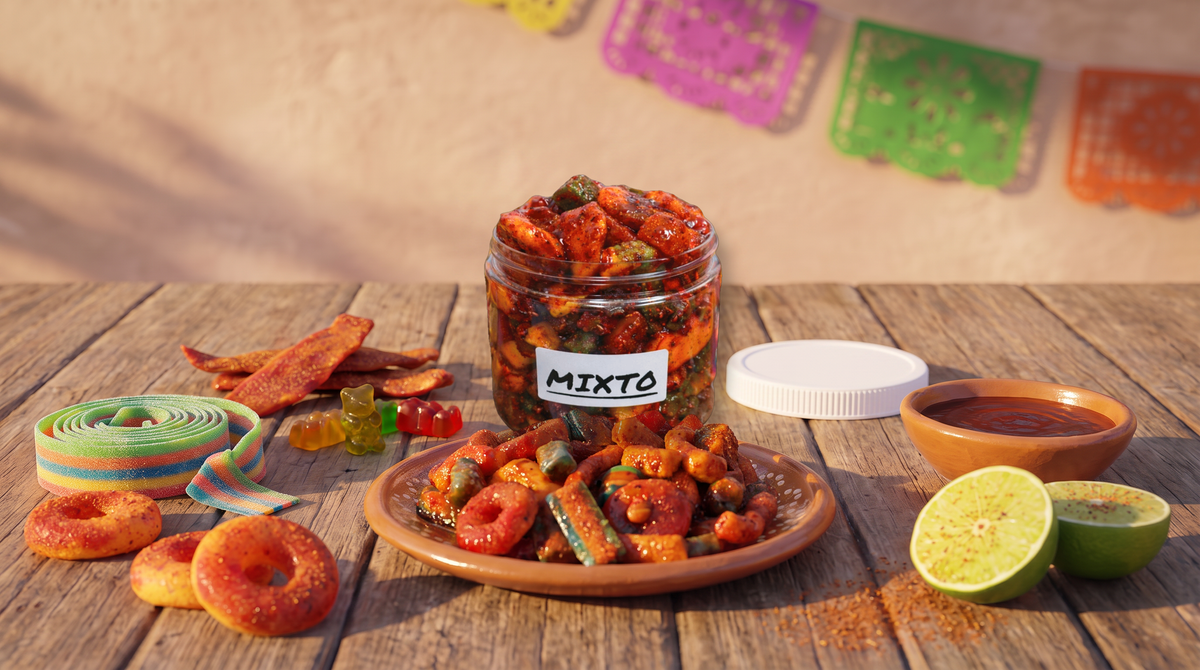
The big names in Mexican snacking are Lucas (sour and spicy powders), Vero (chili-coated lollipops), De La Rosa (Mazapan and Pulparindo), and Ricolino (chocolate and novelty candy). Those four own the shelf classics. Chamoy-coated gummies and dried fruit are a different lane, and that is the lane we make ourselves, starting with the Mixto bag.
But the most interesting growth is happening with smaller, online-first brands that specialize in chamoy-coated treats and sour candy combinations. The global Hispanic foods market reached $36.5 billion in 2024, with the U.S. the largest share, per Market Research Future, and specialty snack brands are capturing a growing share of that.
Buying Mexican Snacks Online
According to NielsenIQ, 30% of Hispanic consumer dollars were spent online in 2025, up from 26% the year before. That shift is making specialty Mexican snacks easier to find than ever. Chili-lime peanuts, chamoy dried fruit, and dipping platters that used to only exist in local dulcerias are now available with a few clicks.
The advantage of buying from a specialty shop versus Amazon or Walmart is freshness and selection. Mass retailers carry the top 5 or 6 brands. Specialty shops carry everything else, and the products tend to be fresher because they turn over faster in a focused inventory.
Mexican Snacks by Region
What people snack on shifts as you move down the map, mostly because of what grows nearby.
In the north, dried fruit and chamoy do the heavy lifting. Mango, pineapple, and apricot get dried and then soaked or dusted with chamoy and chili, and the border cities are where a lot of the chamoy-on-everything habit crossed over. This is the region closest to what most U.S. shoppers already picture when they hear Mexican candy.
Central Mexico runs on corn and candy stalls. Elote and esquites carts park outside markets and metro stations, and the dulcerias behind them sell Mazapan, Glorias, and tamarind candy by the piece. In Mexico City the candy stall is a permanent fixture rather than a weekend thing.
Head south and toward the coasts and fresh fruit takes over. Carts cut mango, jicama, cucumber, and watermelon to order and finish them with lime, chili, and chamoy, while tamarind turns up in candy and drinks alike. Warm weather pushes the snacking toward things you eat cold and wet instead of out of a bag.
To taste across regions in one order, the Mexican snacks collection is the easiest starting point, with the spicy sour peanuts and the chamoy pickle kit in it. Mixto does it in a single bag by putting several styles together.
Are Freeze-Dried Snacks the Next Big Mexican Candy Trend?
Freeze-dried candy is blowing up. The freeze-dried candy market hit $1.5 billion in 2024 and is growing at 8.8% annually, according to SkyQuest Technology. Even Mars got in on it, launching M&M's POP'd (a freeze-dried version) nationwide in January 2026, as reported by Food Navigator USA.
What freeze-drying does is remove all the moisture from candy, turning chewy gummies into light, crunchy puffs that dissolve on your tongue. The flavor concentrates because the water is gone, so everything tastes more intense.
Freeze-dried candy is a newer addition to our lineup, and it has found its crowd fast. Freeze Dried Crunchos from MyChilitos are a perfect example of the trend. If you've never tried freeze-dried candy, the texture alone is worth it.

How to Build a Mexican Snack Box
A snack box lives or dies on variety. You want at least one item from each lane: sour, spicy, chamoy, sweet, and something unexpected. Two bags of the same thing is a wasted slot, no matter how good that thing is.
Here's a sample box using MyChilitos products:
| Category | Pick | Why |
|---|---|---|
| Sour | Rainbow Sour Belts | The crowd favorite. Everyone likes these. |
| Spicy | Chamoy Dried Mango | Chewy dried fruit under chamoy and chili. |
| Chamoy | Chamoy Dipping Platter | The centerpiece. Chamoy + assorted dippers. |
| Sweet | Watermelon Bites | Mellow and sweet for people who don't want heat. |
| Wild Card | Freeze Dried Crunchos | Totally different texture. A conversation starter. |
This combination covers every flavor profile and texture. It works for game nights, birthday gifts, care packages, or just stocking your own snack drawer. Mix and match based on who you're putting it together for.
Frequently Asked Questions About Mexican Snacks
What are popular Mexican snacks?
Popular Mexican snacks include sour belts, chamoy-coated candy, spicy peanuts, Mazapan, tamarind bars like Pulparindo, and traditional antojitos like elote and chicharron. Sour and chamoy-flavored treats are the fastest growing subcategory in the U.S., driven by TikTok exposure and Gen Z's preference for bold flavors.
What is the most popular Mexican snack food?
For savory, tortilla-based items like chips and tostadas lead. For sweets, chamoy-coated candy and sour belts are the top searched products online. Sour belts and rainbow candy strips rank among the fastest growing segments of the category.
What are some Mexican snacks names?
Well-known Mexican snack names include Takis, Duritos, Tostilocos, and Chicharrones on the savory side; Pulparindo, Pelon Pelo Rico, and Vero Mango for tamarind and chili; Mazapan, Glorias, and Gansito for sweets; and rainbow sour belts, chamoy gummies, and chamoy dried mango for the viral sour-spicy category. The full list of 30 names is in the table above.
What Mexican snacks should I try first?
If you're new to Mexican snacks, start with three picks that cover every flavor lane: rainbow sour belts (the crowd-favorite gateway), a chamoy dipping platter (to taste the chili-lime-sweet "swicy" combo), and one nostalgic sweet like Mazapan. That trio gives you sour, chamoy, and traditional candy in a single order without committing to the most intense options.
Are Mexican snacks spicy?
Yes, many are, but not all. The signature Mexican flavor combines chili, lime, and sweetness in what's now called "swicy." Products range from completely mild (Mazapan, rainbow sour belts without chamoy) to intensely spicy (chamoy-coated snacks with extra Tajin). You can find options at every heat level.
What are sour belts?
Sour belts are long, flat candy strips coated in sour sugar crystals. Rainbow sour belts feature layered fruit flavors and bright colors. Mexican candy shops take sour belts further by pairing them with chamoy sauce and Tajin for a tangy-spicy twist.
Where can I buy authentic Mexican snacks online?
Specialty retailers like MyChilitos ship anywhere in the U.S. The MyChilitos candy store carries the sour belts, chamoy dipping platters and chamoy dried fruit, and the Freeze Dried Crunchos have a page of their own. Specialty shops carry items you won't find in mainstream grocery stores, and stock turns over faster so the candy arrives fresher.
What is chamoy and how is it used on snacks?
Chamoy is a Mexican sauce built from brined fruit such as apricot or plum, blended with chili and lime until it turns sweet, sour, and hot at once. It's drizzled on fresh fruit, sour belts, gummy candy, and chips. Dipping platters pair chamoy with multiple snack types for a shared eating experience.
What are antojitos?
Antojitos means "little cravings" in Spanish. They're Mexican street food snacks sold at markets and food stalls. Common examples include elote (grilled corn), quesadillas, gorditas, tamales, and tostadas. They're typically eaten in the morning or evening, between Mexico's main afternoon meal.
What is freeze-dried candy?
Freeze-dried candy is regular candy processed through freeze-drying, which removes moisture and creates an airy, crunchy texture. Mars launched freeze-dried M&M's in January 2026. Mexican candy shops were among the first to sell freeze-dried versions of popular treats.
Mexican snacks go way beyond what most people expect. Sour belts, chamoy dipping platters, freeze-dried candy, chamoy dried fruit, and treats that hit four flavors in one bite. If you haven't explored what's out there, put one mixed order together and find out for yourself.
Shop Mexican snacks and candy at MyChilitos.
Related: What Is Chamoy? The Complete Guide to Mexico's Favorite Condiment
Related: Mexican Candy: The Complete Guide to Types, Brands & Flavors